





















SEPA via your own bank
SEPA direct debit can be used via the company's own bank account. This is especially relevant for recurring B2B payments, service contracts, maintenance contracts and ongoing support fees.
For recurring B2B services, service contracts and retainers
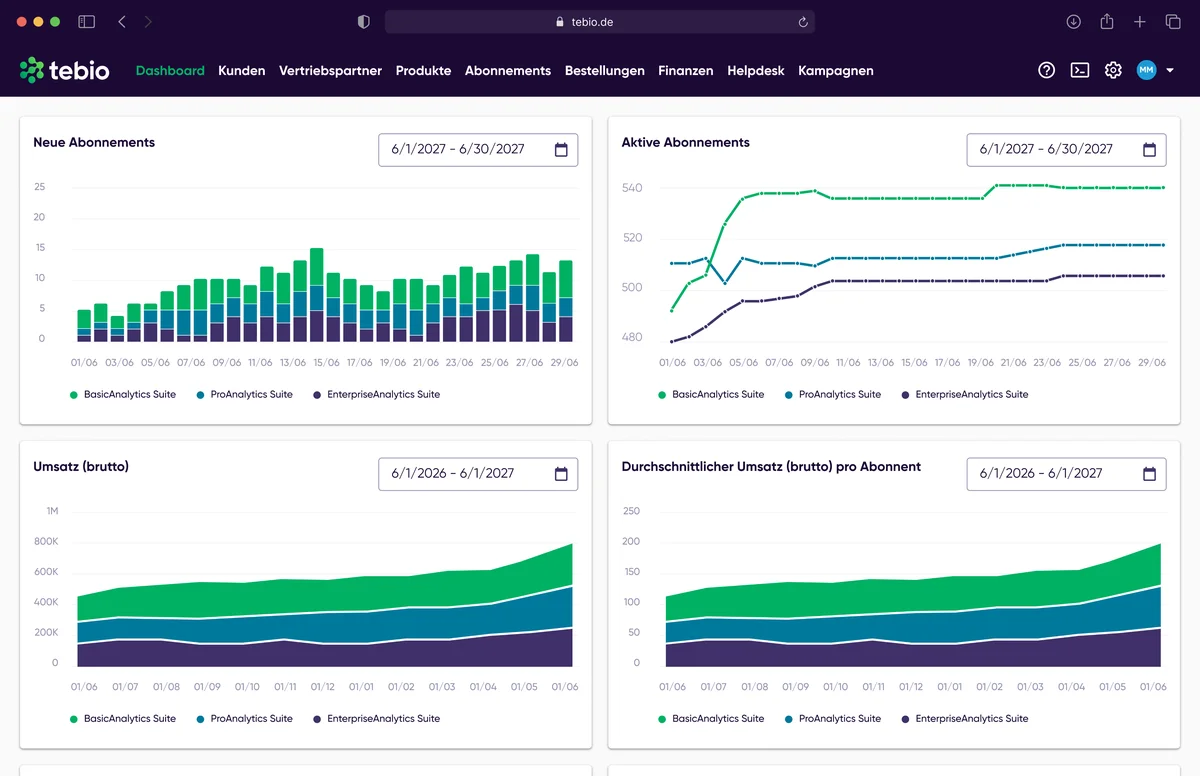
Manage B2B customers, service contracts, recurring services, options, billing cycles, invoices, payment terms, open items and finance processes in one platform. tebio helps service providers manage recurring B2B revenue in a structured way and bill it automatically.
 B2B customer
 Service package / contract
 Options / add-on services / usage
 Subscription
 Billrun
 Invoice / e-invoice
 Payment termsSEPA via your own bank / bank transfer
 Payment / open item
 DATEV export / Reports / API & Webhooks



Many B2B service providers start with individual offers, manual invoices and customer lists maintained by hand. As soon as service contracts, retainers, add-on services, terms, payment terms, open items, e-invoices and recurring billing come into play, you end up with manual reconciliation, sources of error and a heavy workload for operations and finance.
 Customers, contracts, services and invoices are managed in separate systems.Recurring services have to be billed manually.Service packages, options and add-on services are hard to model cleanly.One-time fees and recurring fees are not processed consistently.Terms, cancellations, pauses or service changes affect billing.Payment terms, incoming payments and open items have to be monitored manually.B2B customers expect professional invoices and, increasingly, e-invoices.Pay by invoice, bank transfer and SEPA via your own bank need to fit the billing process.Pure checkout or credit card processes often don't fit established B2B finance workflows.Finance teams need reports, a journal, DATEV export and DATEV-ready processes.External systems such as CRM, ERP, customer portals or service platforms need to be integrated.
With tebio, B2B service providers can manage customers, service packages, subscriptions, options, add-on services, billing cycles, invoices, payment terms, payments and reports in one platform. Recurring services are no longer treated as just a manual invoice template, but as a structured subscription and billing process.
The Business Portal supports internal teams in their day-to-day work. Hosted Pages and Self-Care can map digital customer processes. API and Webhooks connect tebio to existing CRM, ERP, finance, service or product systems. At the same time, typical B2B processes such as invoices, bank transfer, SEPA direct debit via your own bank, open items, DATEV export and e-invoices stay connected.
Many mid-sized B2B service providers work with quotes, contracts, invoices, payment terms, SEPA direct debit, bank transfer and DATEV processes. tebio supports these established workflows and combines them with modern subscription and billing automation.
This lets you bill recurring service contracts automatically without finance teams losing their familiar downstream accounting processes. Customers, subscriptions, invoices, payment status, open items, e-invoices and DATEV export stay linked in one traceable process.
SEPA direct debit can be used via the company's own bank account. This is especially relevant for recurring B2B payments, service contracts, maintenance contracts and ongoing support fees.
B2B customers can pay by invoice. Bank transfer payments, open items and payment status remain traceable in the customer and invoice context.
Payment terms are central to B2B processes. tebio takes payment terms and due dates into account in the invoicing and payment process.
Billing data, invoices, payments and reports can be prepared for DATEV export and downstream finance processes.
For suitable B2B scenarios, tebio can support structured e-invoicing processes, enabling professional invoicing for business customers.

Payment status, outstanding receivables, failed payments and refunds stay linked to customers, subscriptions and invoices.
tebio is a good fit for B2B service providers that don't just sell services once, but bill them regularly, on a contract basis or by usage.
Manage monthly service packages, support retainers, SLA-related services, add-on options and recurring billing.
Bill support packages, maintenance contracts, licenses, add-on services and ongoing customer relationships in a structured way.
Combine monthly retainers, service packages, additional budgets, one-time project components and recurring customer billing.
Manage recurring consulting services, service quotas, package prices and individual B2B billing.
Map regular maintenance, service or support work with terms, options, invoices and payment status.
Bill digital services, access, service levels, add-ons, usage components and API-driven processes.
Companies, contact persons, billing details, addresses and customer-specific information are managed centrally.
Services are modeled via products, options, prices and billing logic.
The service contract is managed as a subscription with term, billing cycle, payment method and status.
Options, one-time fees, additional services or usage-based components can be included in the billing process.
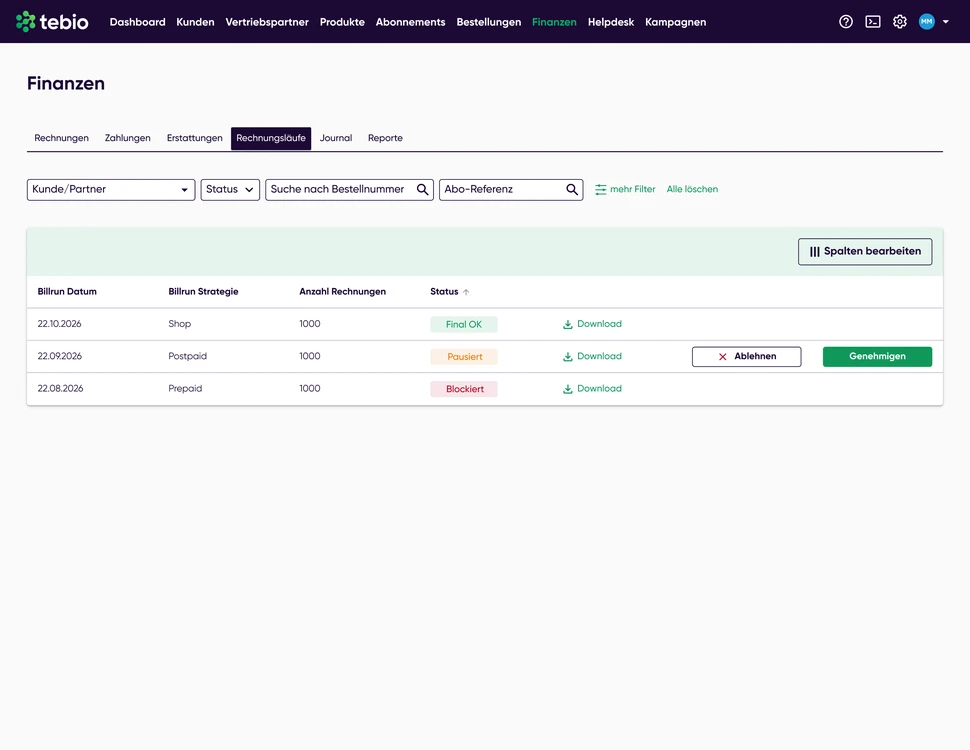
Billable items are collected, rated and transferred into invoicing processes.
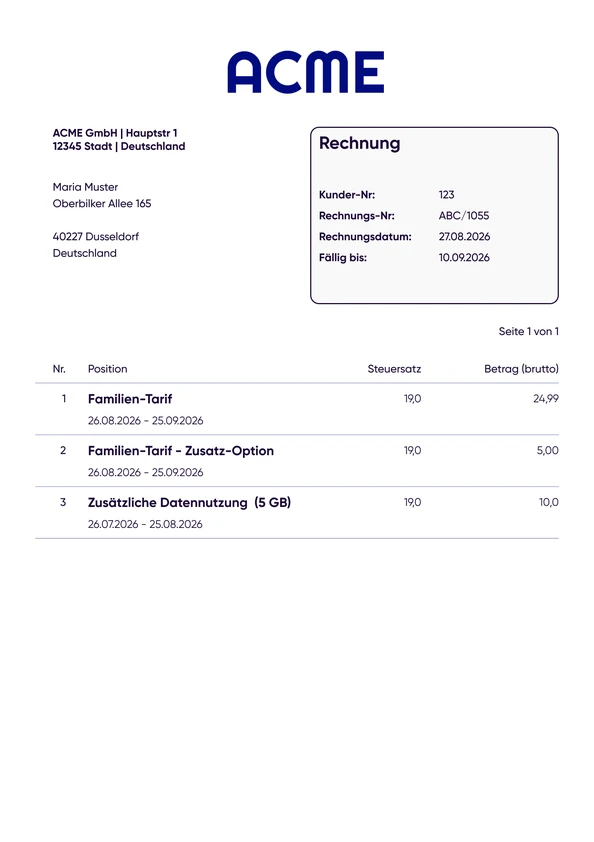
Invoices and suitable e-invoices can be generated and tracked in the customer and subscription context.
Payment terms, incoming payments, open items, failed payments and refunds stay visible.
Reports, journal, DATEV export, DATEV-ready processes, API and Webhooks support downstream processing and integration.
Companies, contact persons, addresses, billing details, properties and documents can be managed in the customer context.
Recurring services can be structured via products, options, prices and billing models.
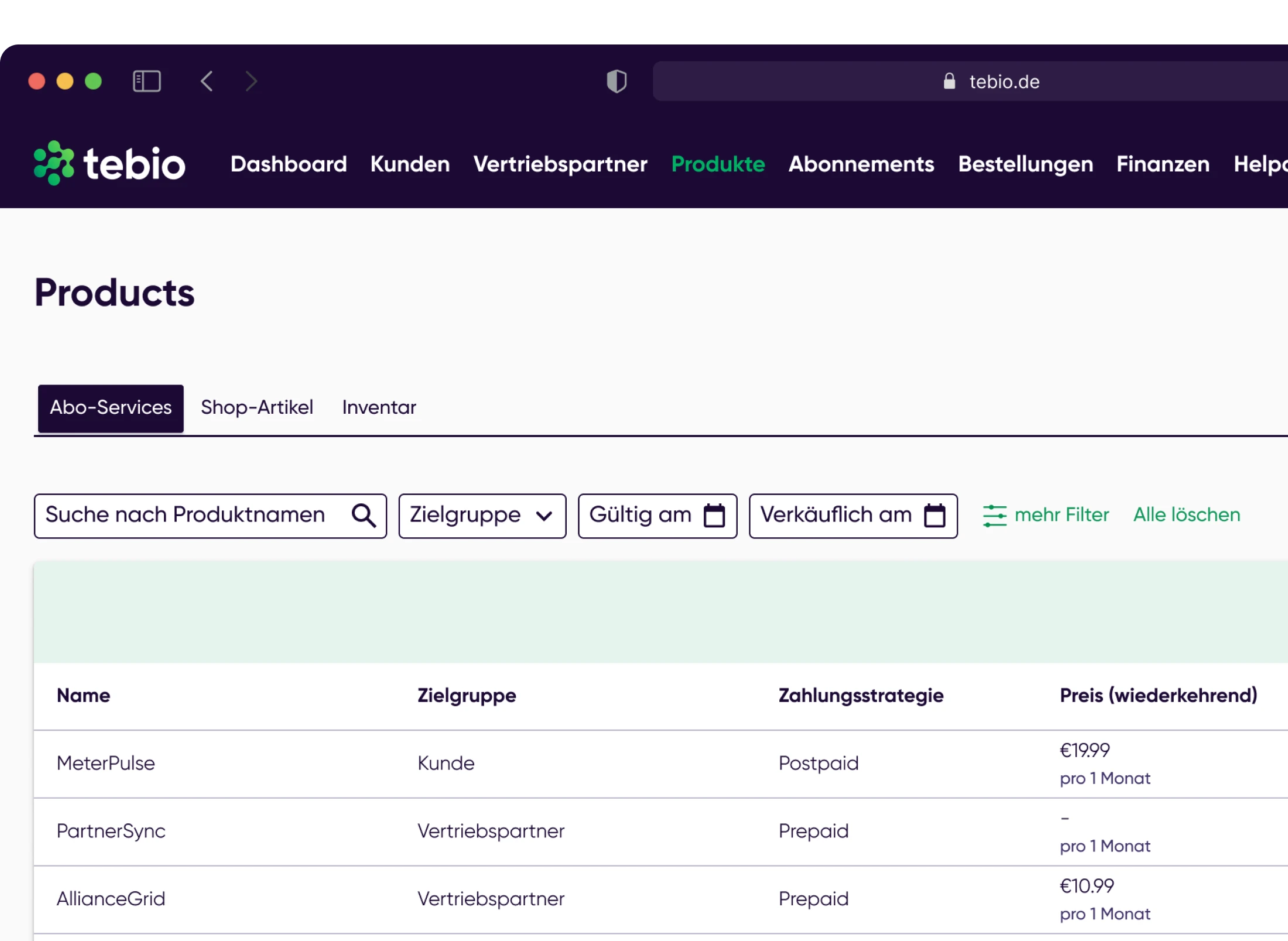
Ongoing B2B service relationships can be managed as subscriptions with status, term, payment method, options and billing cycle.
Regular service fees can be turned into invoices and downstream processes automatically via billruns.
Setup fees, project components, special services or manual charges can be included in addition to recurring fees.
Additional services, service packages, add-ons or extensions can be booked, switched or ended in the subscription context.
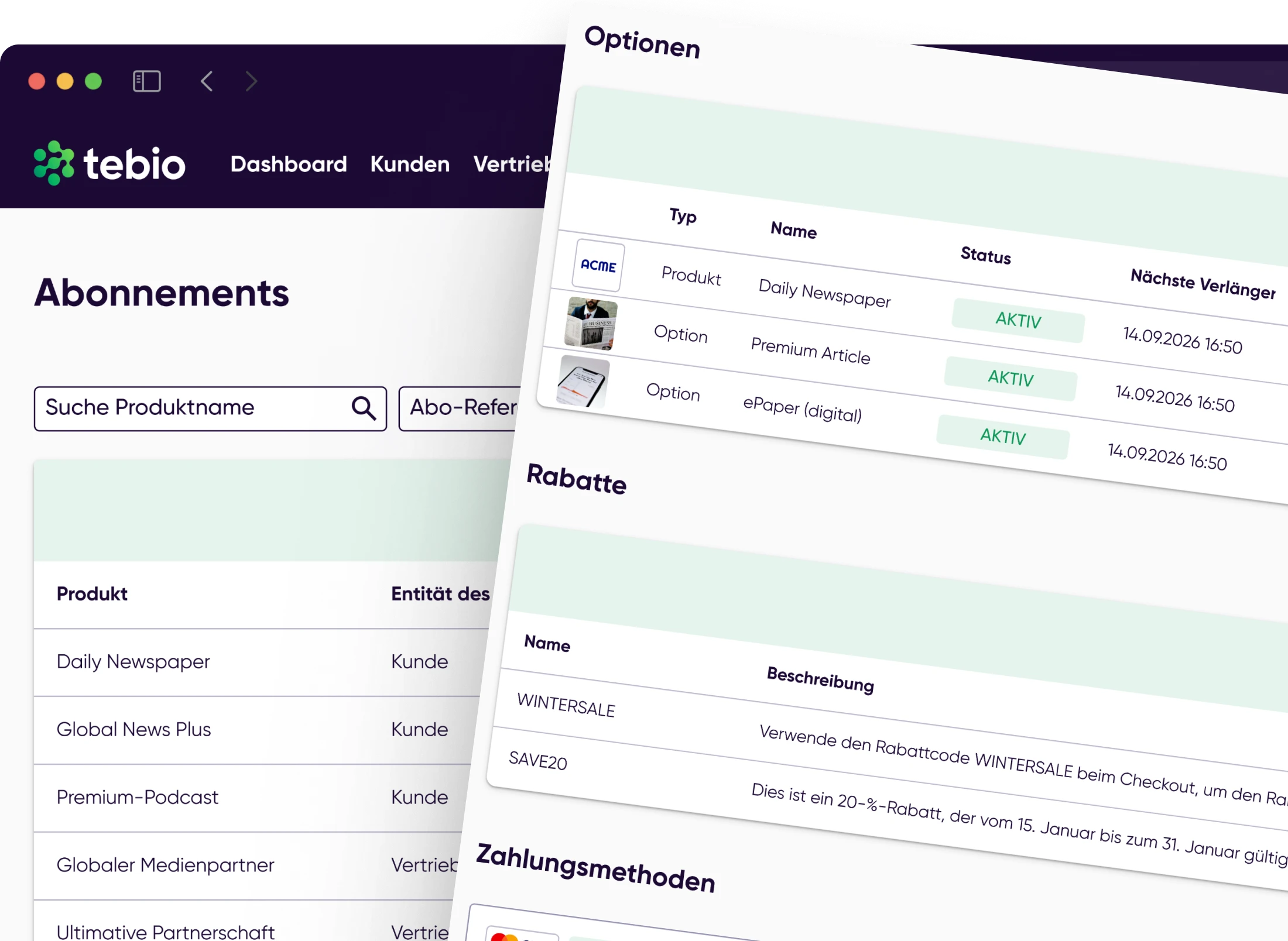
Usage, consumption, service events, quotas or exceeding usage can be included in billing, depending on the business model.
SEPA direct debit and bank transfer can be integrated into the payment process via the company's own bank account. This keeps established B2B finance processes connected.
B2B customers can pay by invoice. Invoices, payment terms, payment status and open items remain traceable in the customer and subscription context.
Payment terms and due dates are central to B2B billing. tebio makes this information visible and traceable in the invoicing and payment process.
For suitable B2B scenarios, tebio can take e-invoices into account and thus support professional invoicing processes for business customers.
Billing and payment data can be prepared for DATEV export, financial reports, journal and downstream accounting processes.
Payment methods, incoming payments, open items, failed payments and refunds stay linked to customers, subscriptions and invoices.
CRM, ERP, finance, customer portals, service platforms or your own backends can be connected via API and Webhooks.
B2B service providers often work with companies, contact persons, different billing addresses, contract data, documents and individual terms. tebio helps make this information usable in the customer and subscription context.
B2B service providers need traceable invoices, clear payment terms, reliable payment status and finance data. tebio connects billing, invoicing, payments, reports, DATEV export and DATEV-ready processes with customers and subscriptions.
 Recurring invoices
 One-time fees
 Options and add-on services
 Usage-based components
 Payment terms
 Pay by invoice
 Payment by bank transfer
 SEPA direct debit via your own bank
 Invoice corrections
 Cancellations (reversals)
 RefundsE-invoices for suitable B2B scenariosIncoming paymentsOpen itemsJournalFinancial reportsDATEV exportDATEV-ready processes

Depending on the setup, B2B customers can order service packages, enter customer data and choose payment methods.

Depending on the setup, customers can view or manage their own data, subscriptions, invoices or payment information.

Digital entry processes can help create B2B customers in tebio in a structured way and trigger downstream processes.
B2B service providers can use Hosted Pages to provide digital ordering, registration or Self-Care processes. This lets you connect customer-facing processes with tebio customer, subscription, billing and payment data.
Many B2B service providers already use CRM, ERP, service platforms, project tools, customer portals or finance systems. API and Webhooks help connect tebio to these systems and process subscription, billing or payment events further.
 CRMERPFinance systemCustomer portalService platformTicket or helpdesk systemProject or PSA systemData warehouseBI systemProduct backendProvisioning system




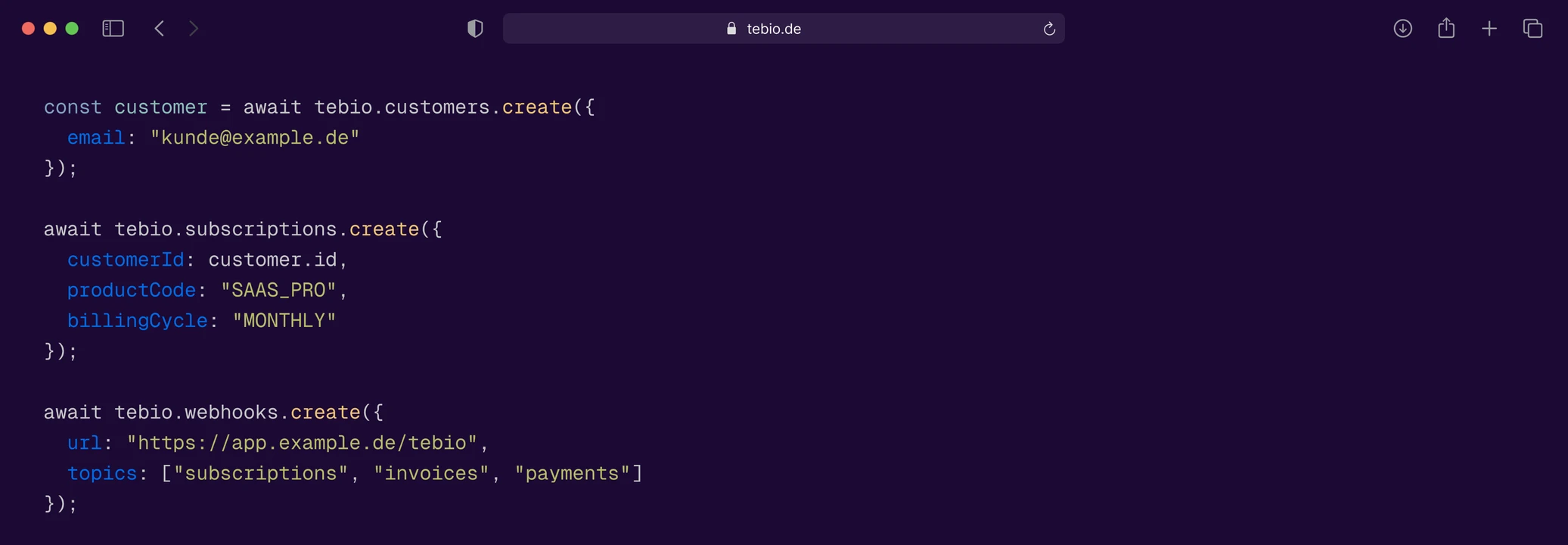
const customer = await tebio.customers.create({
  email: "kunde@example.de"
});

await tebio.subscriptions.create({
  customerId: customer.id,
  productCode: "EPAPER",
  billingCycle: "MONTHLY"
});

await tebio.webhooks.create({
  url: "https://app.example.de/tebio",
  topics: ["subscriptions", "invoices", "payments"]
});
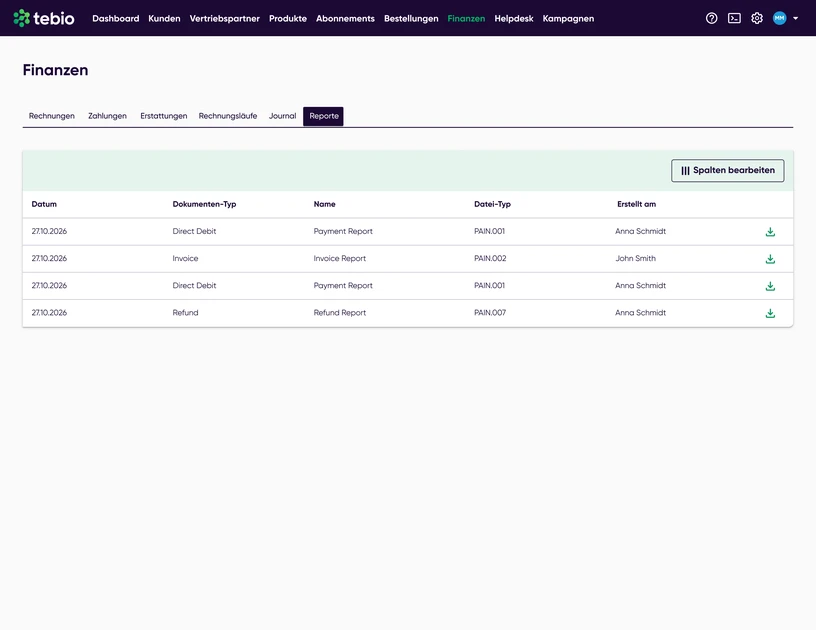
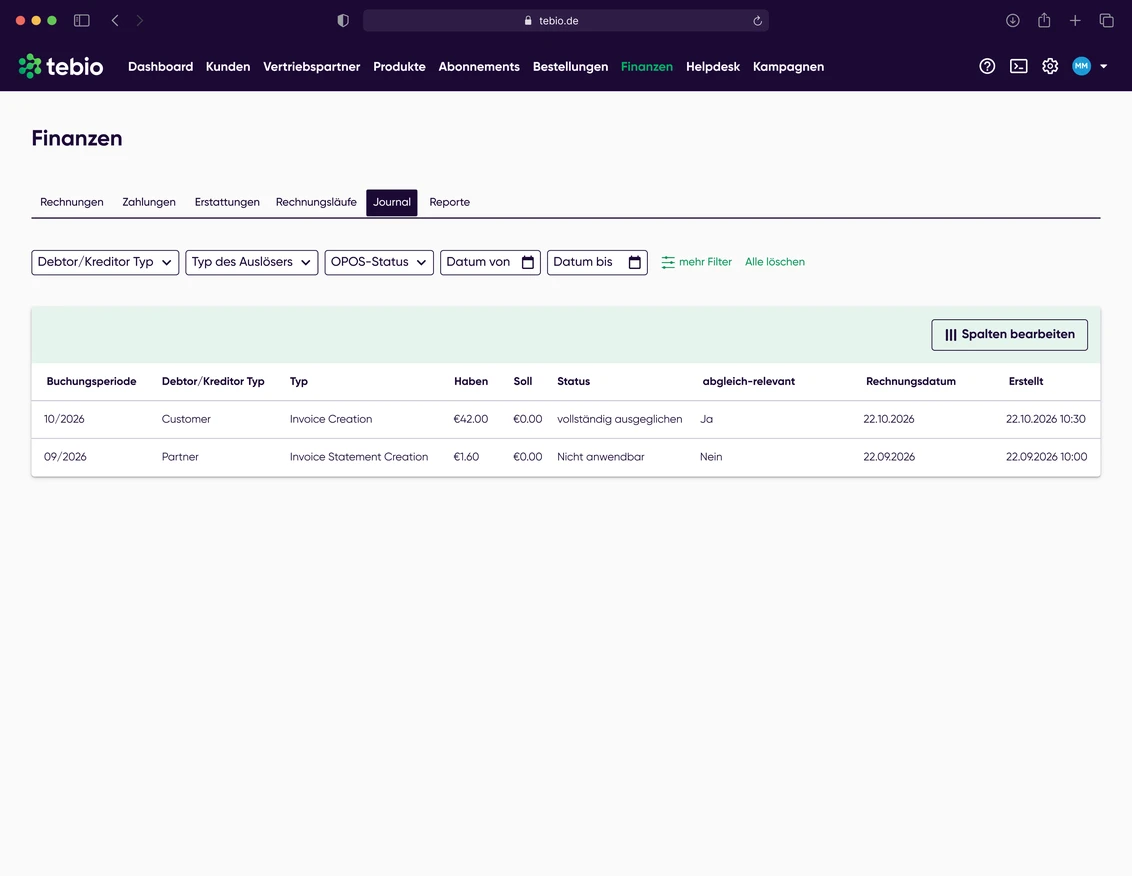
B2B service billing creates downstream accounting processes. tebio supports journal, financial reports, payment status, open items, DATEV export and DATEV-ready processes so billing data can be reviewed and processed further in a structured way.
 Invoice overviews
 Payment terms
 Payment status
 Open items
 Revenue-related analysesJournalFinancial reports
 DATEV exportDATEV-ready processes
 Export and reconciliation processes
 Support for accounting and tax advisors
An IT service provider sells monthly support packages, add-on services and support options to business customers and bills them regularly by invoice, SEPA or bank transfer.
An agency offers monthly retainers, additional budgets and one-time services and wants to manage recurring billing, payment terms and payment status centrally.
A service provider manages ongoing maintenance contracts, optional add-on services, invoices, cancellations, open items and finance analyses.
A provider of digital B2B services connects a customer portal, subscription management, billing, payments and API events.
A service provider sells recurring support packages with fixed terms, options, billing runs, payment terms and open items.
A consulting firm sells regular quotas or service packages and needs traceable B2B invoicing processes, including e-invoices and DATEV export.
The tebio documentation shows how to set up and use customers, products, subscriptions, invoices, payments, Hosted Pages and integrations in tebio.
 View documentation
 Create a subscription productDefine service packages, options and prices for recurring B2B services.Create a subscriptionCreate ongoing service contracts as subscriptions in the Business Portal.Book or switch an optionManage add-on services, add-ons or service extensions in the subscription context.Create an invoiceGenerate invoices from billing processes.Search invoices and review detailsReview invoices, payment status, documents and events in the customer context.Configure payment methodsSet up payment methods such as SEPA, bank transfer or other payment channels to fit your B2B process.Review incoming paymentsKeep track of open items, payment status and incoming payments.Financial reports and DATEVUse reports, journal and DATEV-ready processes for downstream finance workflows.Set up Hosted PagesConfigure order pages, Self-Care or registration processes for customers.API and WebhooksConnect tebio to CRM, ERP, finance, service platforms or your own systems.
tebio is suited for B2B service providers that want to manage and bill recurring services, service contracts, retainers, support packages, maintenance contracts, digital services or usage-based services.
Yes. tebio is suitable for mid-sized B2B service providers that want to manage recurring service contracts, retainers, maintenance contracts or support packages and bill them automatically. B2B processes such as invoices, payment terms, bank transfer, SEPA direct debit via your own bank, DATEV export and e-invoices are especially relevant here.
Yes. Service contracts can be managed in tebio as subscriptions with customers, products, options, terms, payment methods and billing cycles.
Yes. Recurring fees can be combined with one-time fees, add-on services, options or usage-based components, depending on the respective product and billing model.
Yes. B2B customers can pay by invoice. Invoices, payment terms, incoming payments, open items and payment status can be tracked in the customer and subscription context.
Yes. SEPA direct debit can be used via the company's own bank account, provided the procedure is set up accordingly. This is especially relevant for recurring B2B payments and ongoing service contracts.
Yes. Payment terms and due dates are important parts of B2B billing. tebio takes payment terms into account in the invoicing and payment process and makes payment status and open items traceable.
tebio supports structured invoicing processes and can take e-invoices into account for suitable B2B scenarios. Actual use depends on configuration, business model and functional requirements.
tebio can prepare billing and payment data for DATEV export and DATEV-ready downstream processes. This helps finance teams better connect recurring B2B billing with accounting and tax advisors.
Yes. Incoming payments, payment status, open items, failed payments and refunds can be tracked in the context of customers, subscriptions and invoices.
Yes. Via API and Webhooks, tebio can be connected to CRM, ERP, finance, customer portal, service or reporting systems.
Yes. Depending on the setup, Hosted Pages can be used for Self-Care, order pages or registration processes. Your own portals can be added or integrated via API and Webhooks if needed.
No. tebio is not project management or PSA software. tebio focuses on subscription management, billing, payments, Hosted Pages, API, Webhooks and finance-related processes for recurring business models.
Yes. tebio can take usage-based components into account when business models include usage, consumption, quotas or exceeding usage.
No. tebio is not full accounting software and not an ERP system. tebio supports operational billing processes, invoices, payments, reports, journal, DATEV export and DATEV-ready downstream processes.

Start with tebio for free or talk to us about how you can connect B2B customers, service contracts, subscriptions, invoices, payment terms, SEPA, bank transfer, DATEV export, e-invoices, Self-Care and integrations in one platform.