








Skip to content

For connected devices, IoT services and usage-based business models

Subscription Management & Billing for IoT providers

Sell, activate and automatically bill connected devices — with the Business Portal, Hosted Pages, API and Webhooks. tebio supports IoT providers with customer management, device and service subscriptions, recurring billing, usage-based fees, payments, Self-Care, helpdesk and the integration of external IoT systems.

IoT business models don't end with the device sale.

IoT providers need to keep customers, devices, resources, service contracts, plans, usage data, invoices, payments, support processes and external platforms reliably in sync. Recurring services, usage-based fees and device status information make billing more complex than a classic product sale.

Devices, contracts & billing

  • Devices, customers and subscriptions must be clearly linked to one another.
  • A device can be tied to a service contract, plan or add-on package.
  • IoT services can combine recurring and usage-based fees.
  • Usage data or metered values must be processable for billing.

Device operations & customer service

  • Device activation, deactivation and status changes must reach external systems.
  • Customers need Self-Care and support processes for devices, contracts and invoices.
  • Failed payments must be traceable for support and Finance.

System integration

  • IoT platform, CRM, ERP, Finance and data warehouse must stay in sync.

tebio connects devices, subscriptions, usage, billing and integration.

With tebio, you manage customers, device assignments, subscriptions, products, options, prices, discounts, usage events, invoices, payments and downstream processes in one platform. Via the Business Portal, Hosted Pages, API and Webhooks, tebio can be integrated into existing IoT, CRM, ERP, Finance and Self-Care processes.

For IoT providers, tebio covers the commercial layer around connected devices, service contracts, subscriptions, billing, payments and customer processes. External systems for device management, telemetry, provisioning or usage metering can be connected via API and Webhooks.

Typical workflows for IoT providers

1. Order a connected device or service

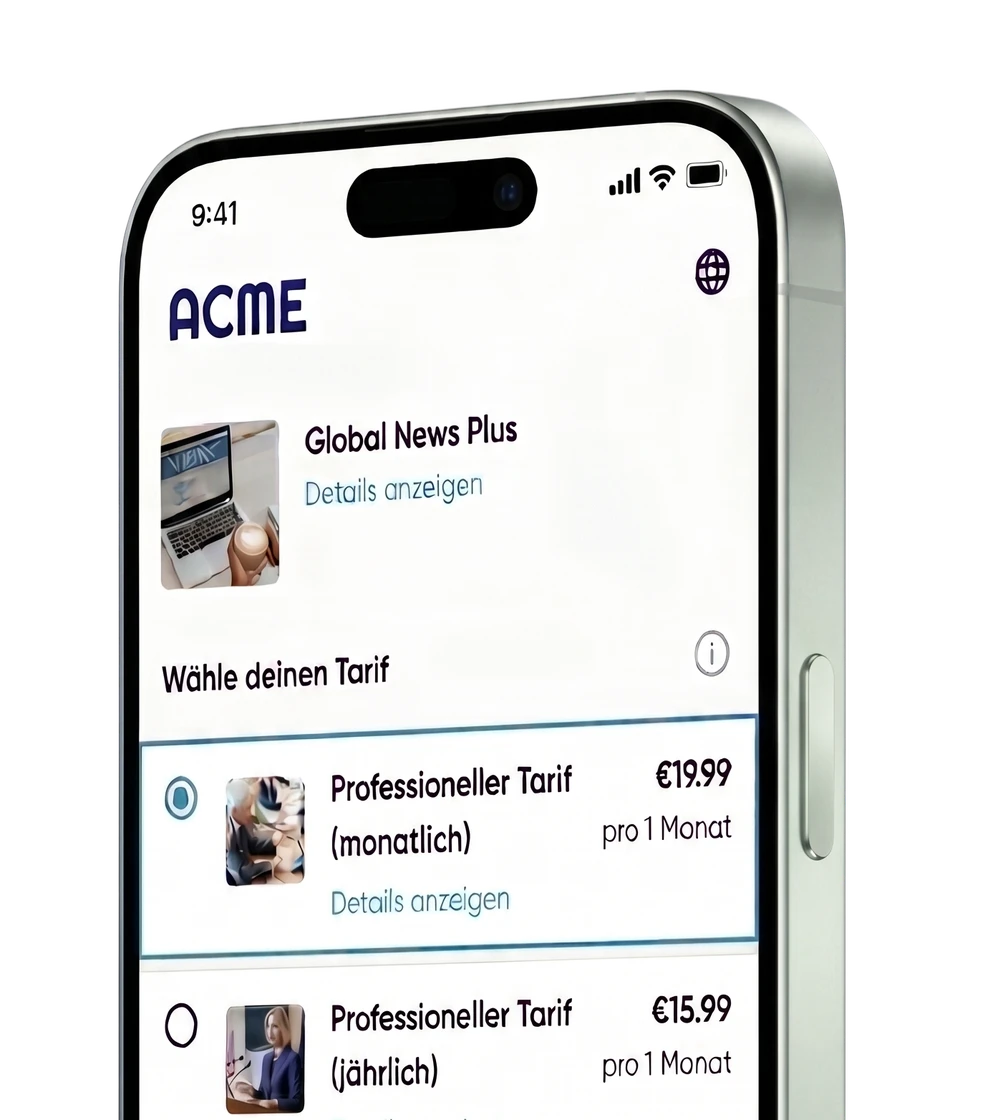
Customers can order devices, services or service contracts via Hosted Pages, an existing frontend or through internal teams in the Business Portal. tebio brings customer data, product, subscription, payment method and billing together in one process.

2. Link devices and subscriptions

Devices, resources or technical identifiers can be taken into account in the subscription context. This lets you clearly connect service contracts, plans or add-on options to the respective customer and device.

3. Manage plans, options and service packages

IoT offerings can be modeled using products, options, prices and discounts — for example basic services, premium features, maintenance packages, connectivity packages or additional data services.

4. Capture and bill usage

Usage events or billing-relevant metered values can flow into billing. This lets you combine recurring fees and usage-based line items in a single billing process.

5. Integrate device status and provisioning

Information on subscription status, product, option or payment status can be passed to external IoT, provisioning or device platforms via API and Webhooks.

6. Run an automated billrun

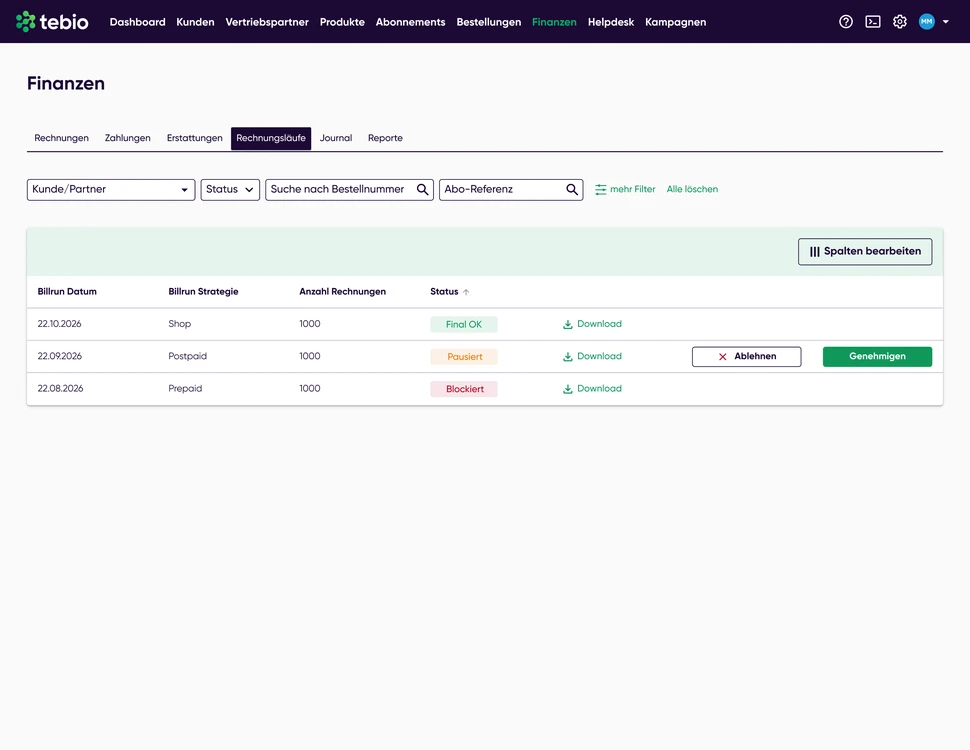
Recurring fees, usage-based line items, discounts, prorated charges, invoices and payment processes can be processed based on rules.

7. Handle payment failures

Failed SEPA direct debits, open invoices or missing bank transfers can be tracked in the Business Portal and handed over to customer service or Finance processes.

8. Connect Self-Care and helpdesk

Customer requests about devices, service contracts, invoices, payments or status changes can be captured and handled in a structured way via digital Self-Care and helpdesk processes.

9. Keep external systems in sync

Subscription status, device assignment, product access, payment status and billing events can be transferred to the IoT platform, CRM, ERP, Finance or data warehouse via API and Webhooks.

Features that matter most to IoT providers

  • Manage customers, device assignments and subscriptions

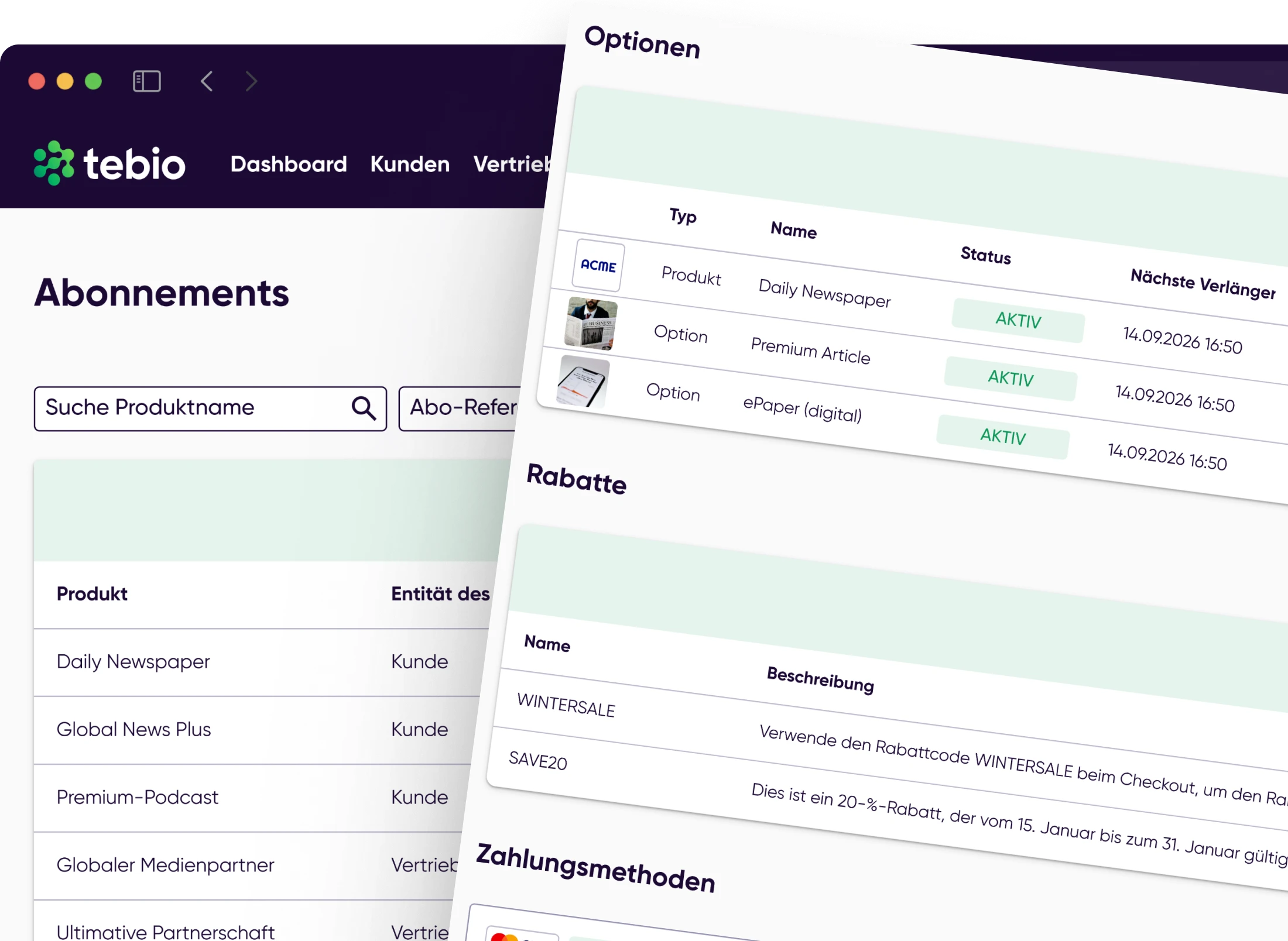
    Manage customers, contacts, addresses, properties, subscriptions, resources and event histories centrally in the Business Portal. This gives support, sales, operations and Finance an overview of active device services and past changes.

  • Model products, options, prices and service packages

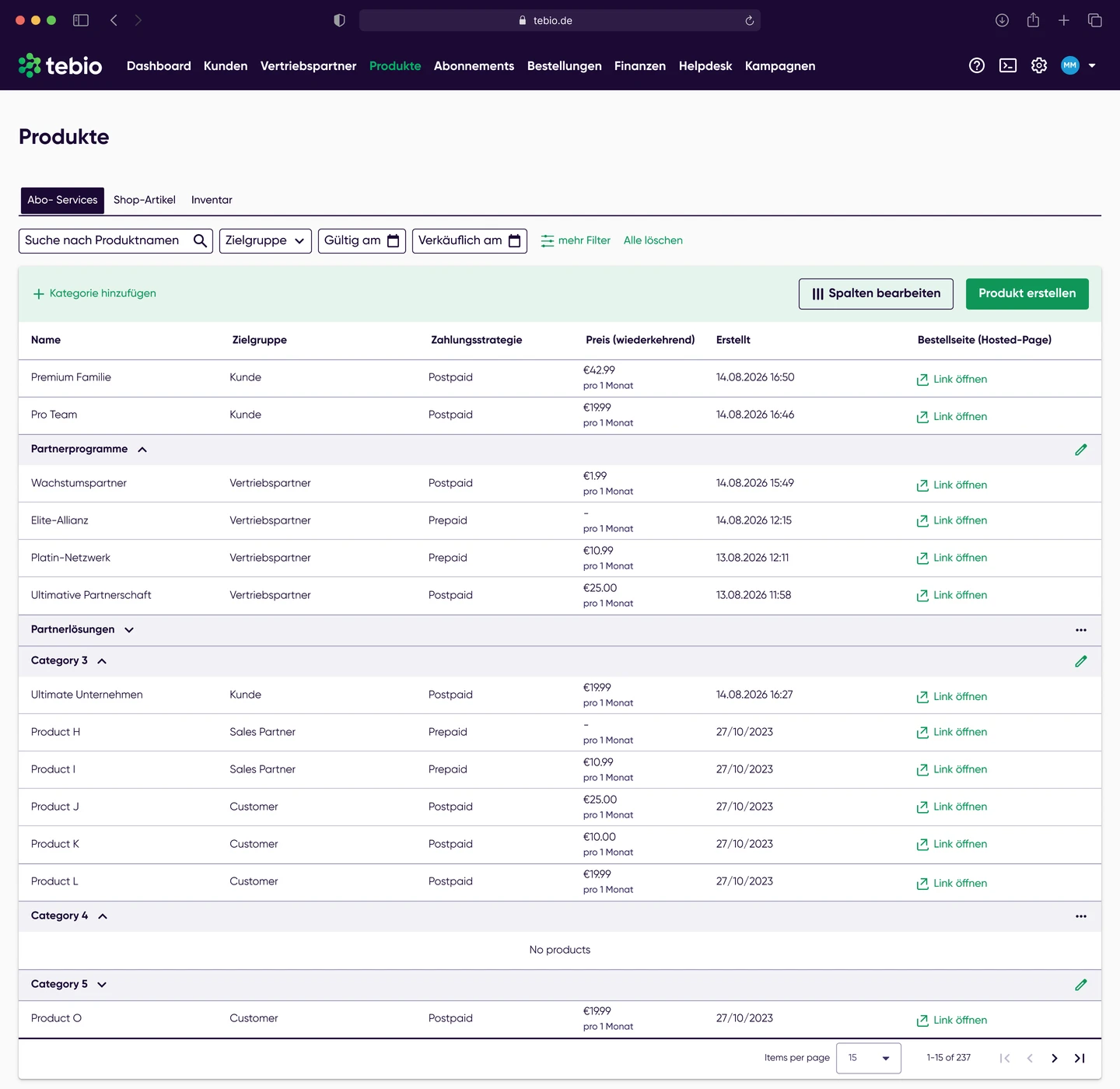
    Map device services, maintenance packages, connectivity packages, premium features, data services or add-on modules using products, options, prices and discounts.

  • Automate recurring billing

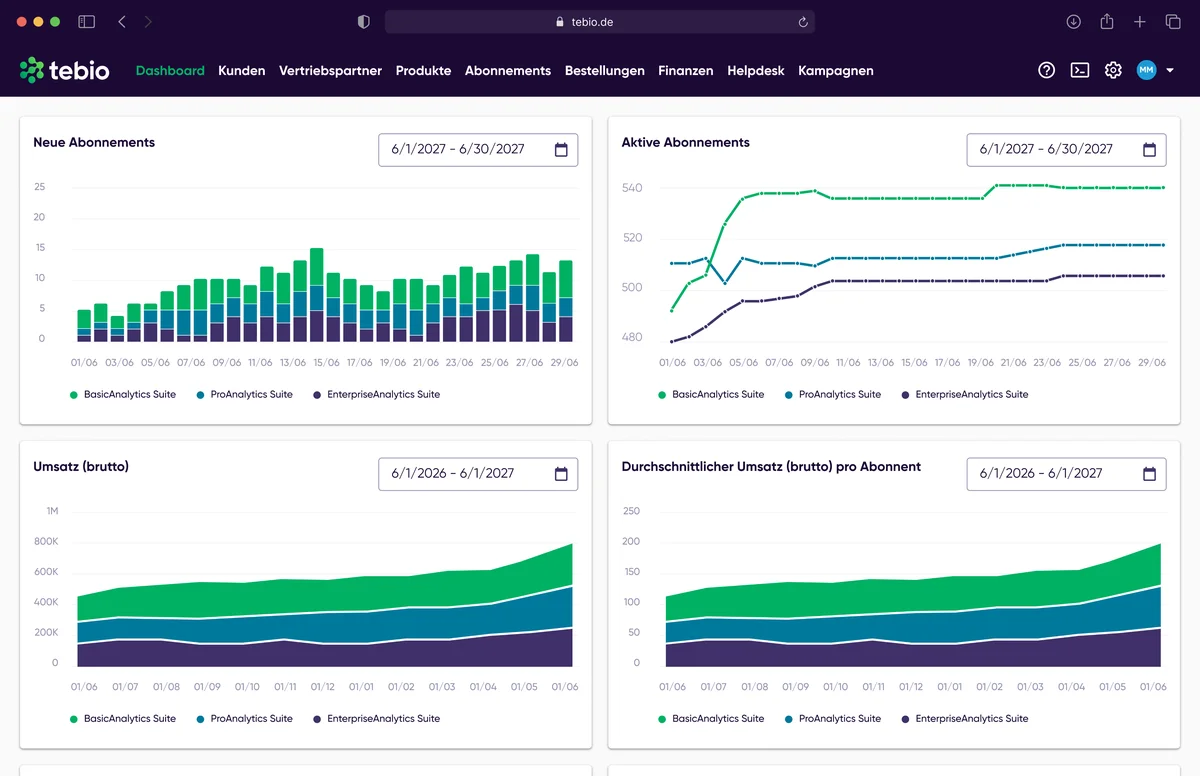
    tebio supports recurring billing via rating, billrun, invoices, receipts, discounts, proration and correction processes.

  • Process usage-based billing

    Usage events can flow into billing. This lets you account for consumed units, metered values, additional usage and usage-based line items in billing.

  • Map device subscriptions and resources

    Devices, resources or technical identifiers can be linked to customers and subscriptions. This creates a commercial view of active devices, services, contract status and billing processes.

  • Process payments via your own bank

    IoT providers can handle payment processes such as SEPA direct debit and bank transfer via their own bank account. Incoming payments, open items and failed payments remain traceable in the Business Portal.

  • Connect Self-Care and helpdesk

    Customers can use digital Self-Care processes. Resulting requests can be handled, documented and linked to the customer context in the integrated helpdesk.

  • Connect IoT platforms via API and Webhooks

    Integrate tebio with your IoT platform, device management, provisioning, CRM, ERP, finance system or data warehouse. API and Webhooks ensure that relevant subscription, payment and billing events can be processed further.

  • Provide finance-ready processes

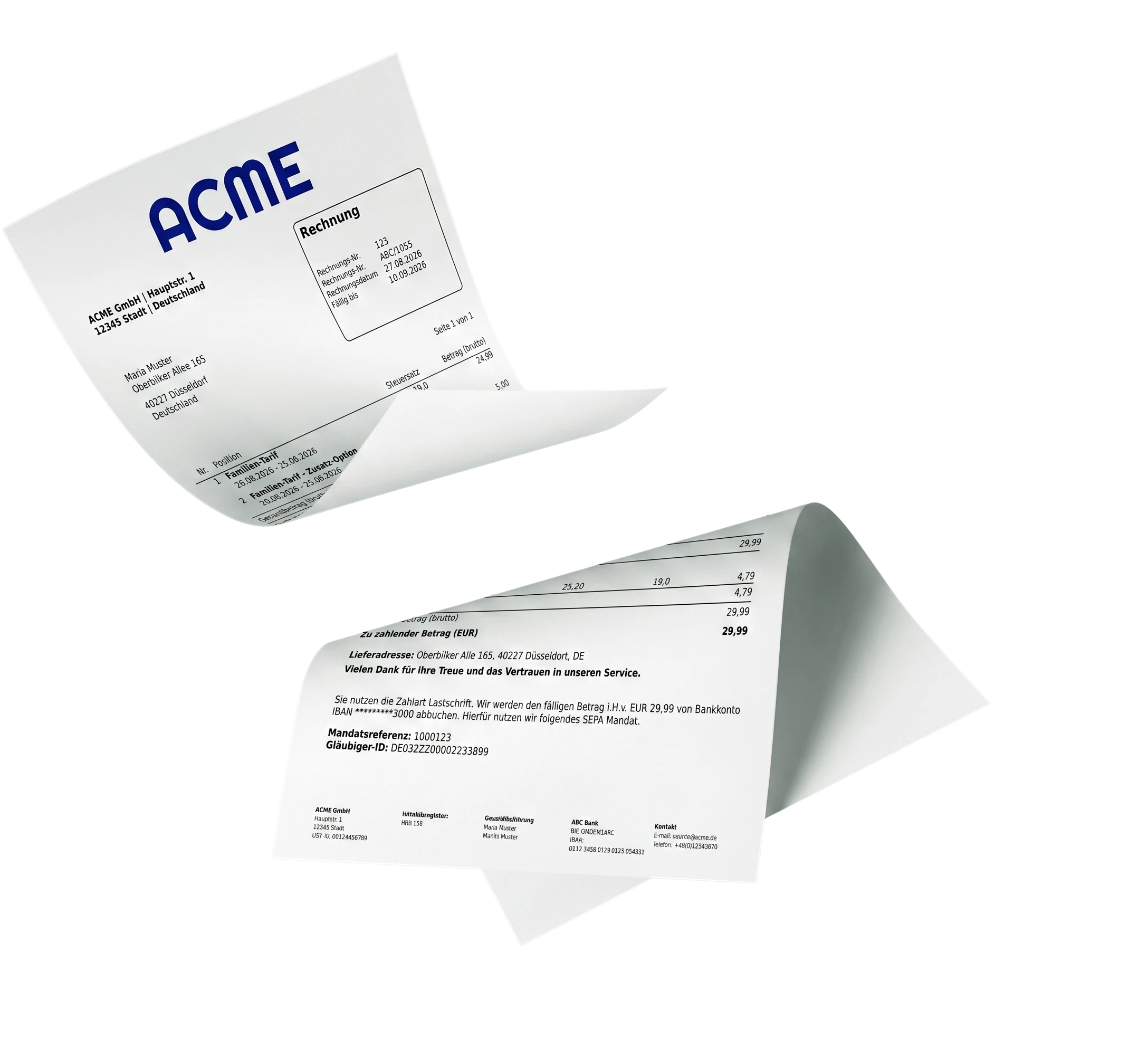
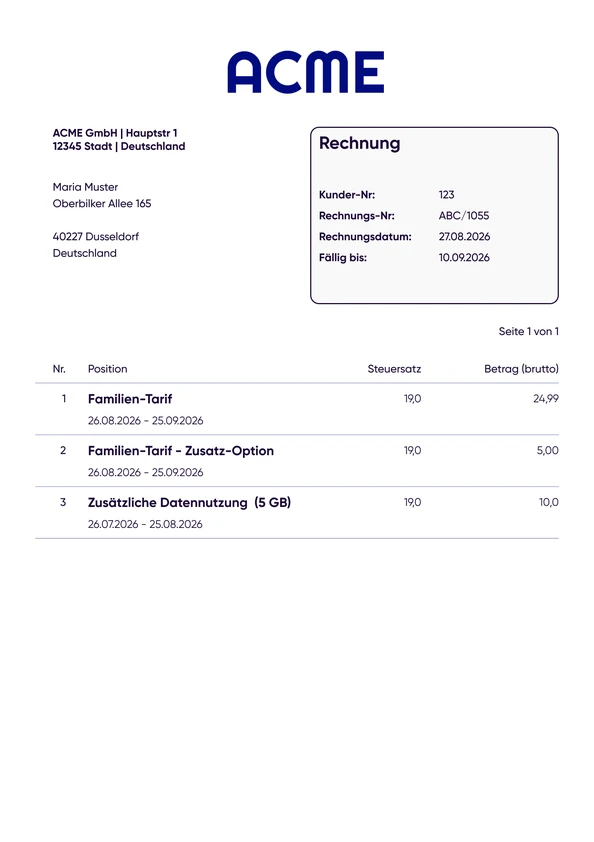
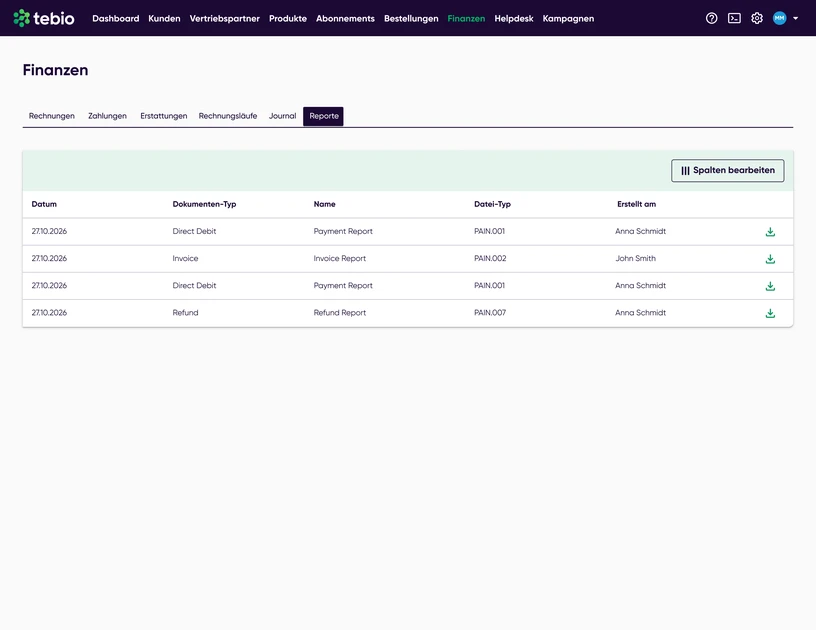
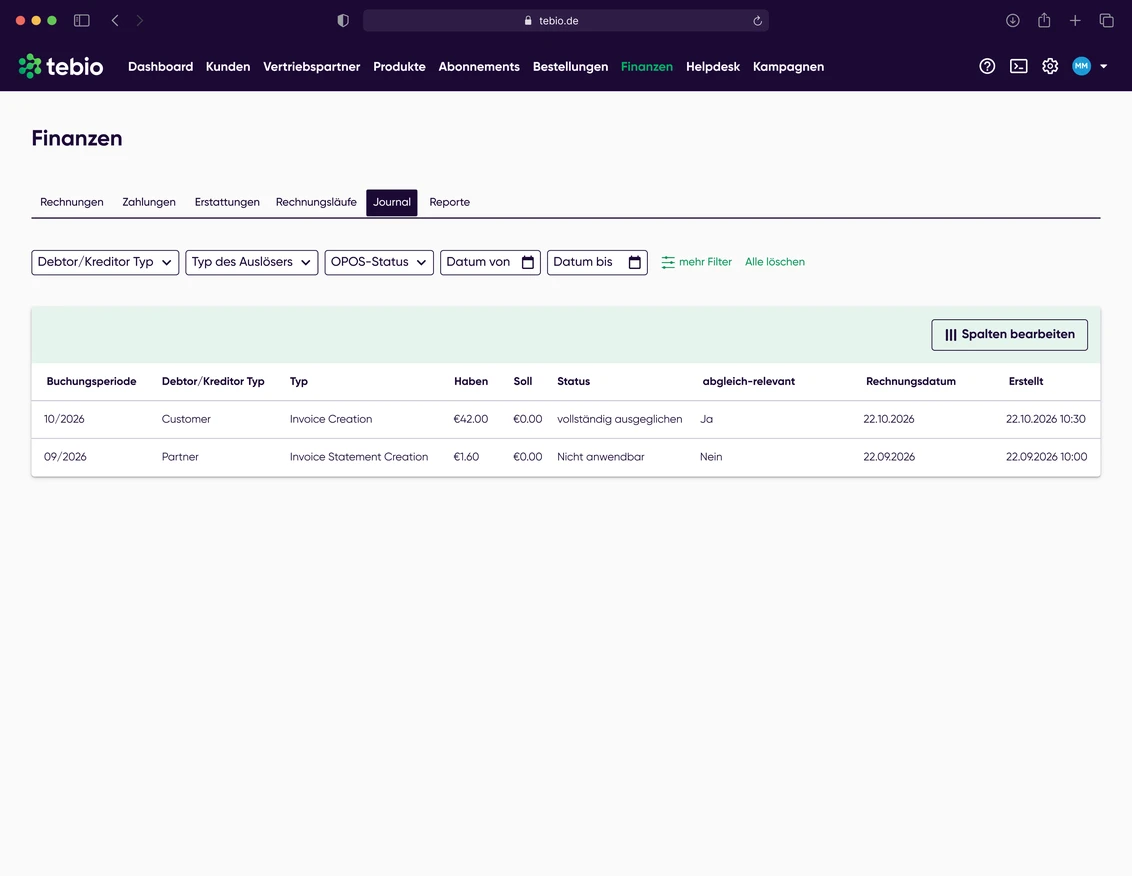
    tebio supports invoices, receipts, journal, financial reports and DATEV-ready processes. For suitable B2B scenarios, e-invoices can also be relevant.

Usage, devices and billing for connected business models

IoT business models often combine device assignments, service contracts, recurring fees, add-on packages and usage-based billing. tebio supports the commercial processing of usage events, recurring fees, discounts, proration, invoices and payment processes.

  • Device subscriptions
  • Resources and technical identifiers
  • Recurring base fees
  • Service packages and add-on options
  • Usage-based billing
  • Metered values and usage events
  • Discounts
  • Proration
  • Billrun
  • Invoices and receipts
  • Payment status
  • Open items
Self-Care
Event-based messages
Helpdesk
  • Order confirmation
  • Subscription activation
  • Service activation
  • Option booking
  • Contract change
  • Cancellation confirmation
  • Payment reminder
  • Failed payment notice
  • Invoice notification
  • Support ticket updates

Self-Care, customer communication and helpdesk

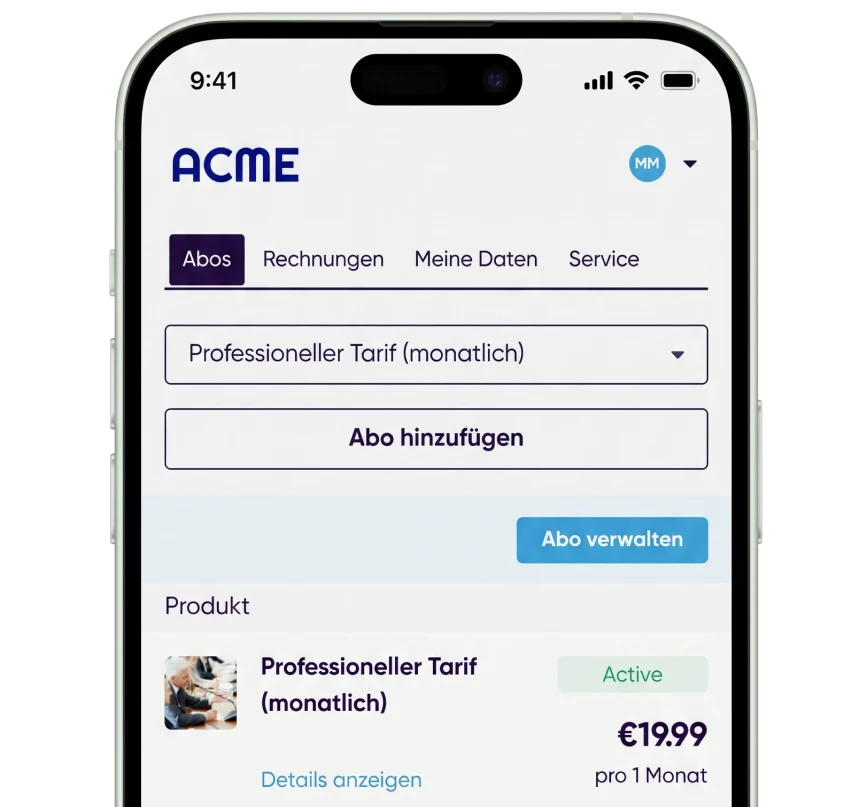
tebio supports digital customer processes along the device and subscription lifecycle. Event-based messages, Self-Care features and integrated helpdesk processes help you handle requests about devices, services, invoices, payments, contracts or subscriptions in a structured, traceable way.

Integrate with existing IoT systems

tebio can be connected to existing IoT, provisioning, CRM, ERP, Finance and Self-Care systems via API and Webhooks. This keeps subscription status, device assignment, product access, payment status and billing events up to date in connected systems.

  • IoT platform
  • Device management
  • Provisioning system
  • Telemetry or usage system
  • Connectivity system
  • Self-Care portal
  • CRM
  • ERP
  • Finance system
  • Data warehouse
  • Customer support system
  • Reporting and BI systems
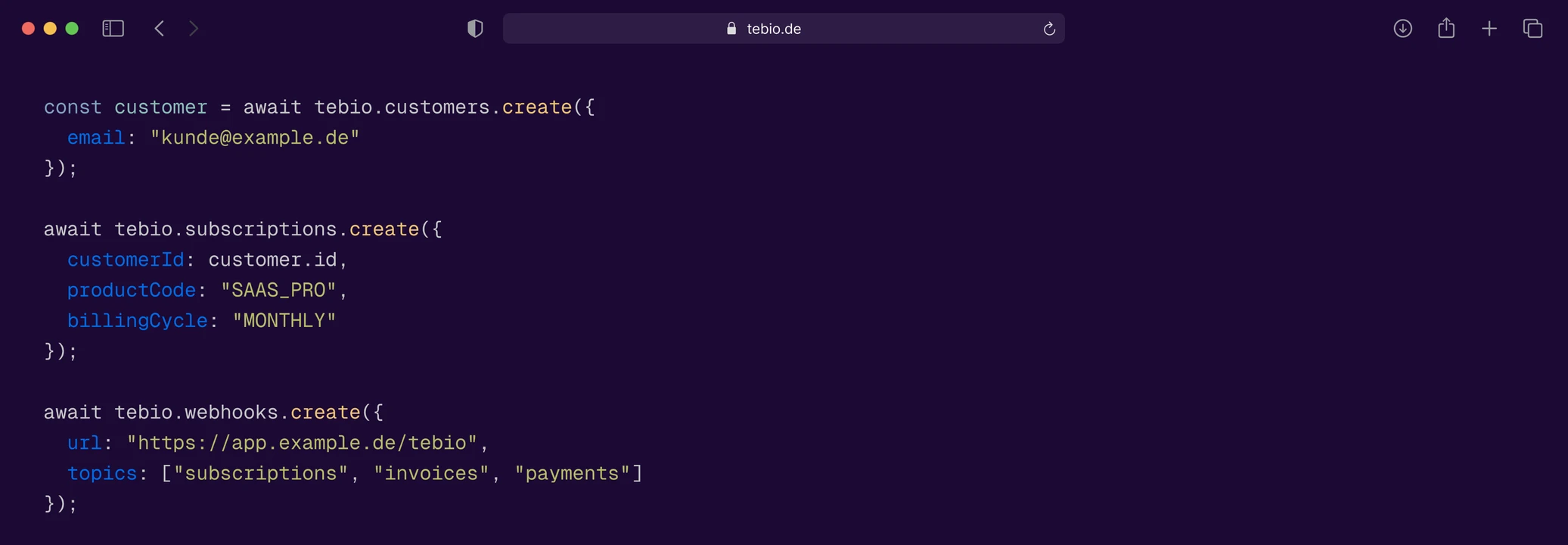
const customer = await tebio.customers.create({
  email: "kunde@example.de"
});

await tebio.subscriptions.create({
  customerId: customer.id,
  productCode: "EPAPER",
  billingCycle: "MONTHLY"
});

await tebio.webhooks.create({
  url: "https://app.example.de/tebio",
  topics: ["subscriptions", "invoices", "payments"]
});

Frequently asked questions

Can tebio manage IoT services and device subscriptions?

Yes. tebio can map products, options, prices, resources and terms. This lets you manage device services, service contracts, add-on packages and device subscriptions in a structured way.

Can tebio link devices or technical resources to subscriptions?

Yes. Devices, resources or technical identifiers can be taken into account in the subscription context. This creates a commercial view of customers, devices, services and billing processes.

Does tebio support usage-based billing for IoT services?

Yes. Usage events or billing-relevant metered values can flow into billing. This lets you combine recurring fees and usage-based line items.

Can tebio be connected to an existing IoT platform?

Yes. Existing IoT platforms, provisioning systems, device management, CRM, ERP, finance or data warehouse systems can be connected via API and Webhooks.

Can tebio handle SEPA direct debit and bank transfers via our own bank?

Yes. tebio supports payment processes such as SEPA direct debit and bank transfer via the company's own bank account, provided they are configured accordingly. Incoming payments, open items and failed payments can be tracked in the Business Portal.

Are there Self-Care and helpdesk features for IoT customers?

Yes. tebio supports digital Self-Care processes and integrated helpdesk features. Depending on the setup, customer requests can originate digitally and be handled further in the Business Portal.

Does tebio support invoices, reports and DATEV-ready processes?

Yes. tebio supports invoices, receipts, journal, financial reports and DATEV-ready export processes. For suitable B2B scenarios, e-invoices can also be relevant.

Is tebio an IoT device management or telemetry platform?

No. tebio is a subscription management & billing platform. IoT platforms, device management, telemetry or provisioning systems can be connected via API and Webhooks.

Ready for scalable IoT billing?

Talk to us about your connected devices, service contracts, usage-based billing, payment processes and integration requirements.